

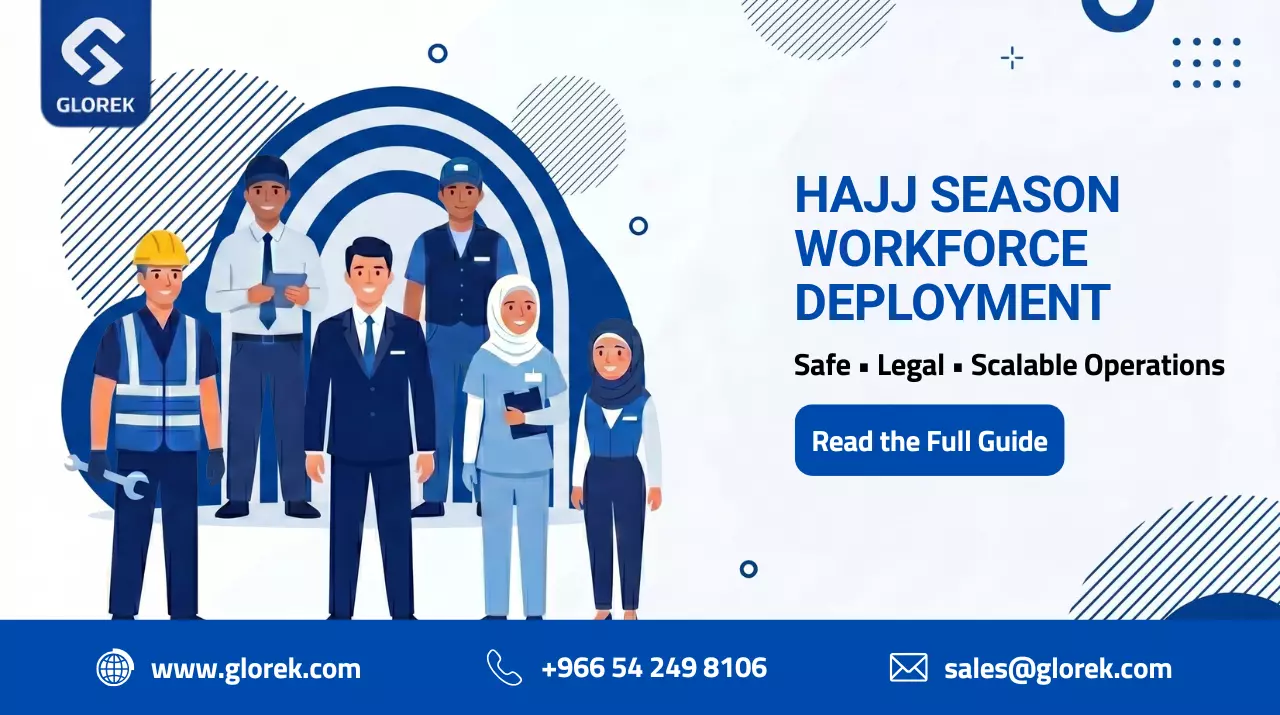
The Hajj season is one of the largest and most complex human gatherings on Earth. For businesses, hospitality groups, logistics firms, and government contractors in Saudi Arabia, managing operations during this holy period is both a massive privilege and an immense operational challenge.
With millions of pilgrims arriving in Makkah and Madinah, the demand for services spikes overnight. To survive and thrive, organizations must scale their workforce by sourcing and deploying thousands of temporary workers.
However, doing this efficiently and, more importantly, safely and legally requires meticulous planning. Here is the ultimate step by step guide on how to successfully manage large scale seasonal manpower for the Hajj season.
1. Compliance and Legal Framework: Safety Starts with the Law
In Saudi Arabia, safety and legality go hand in hand. Deploying temporary workers without proper legal documentation can lead to severe penalties, heavy fines, operational shutdowns, and permanent reputational damage.
Key Legal Requirements to Follow:
- The Ajeer System Registration: You cannot just hire anyone from the street. Every temporary or seasonal worker must be legally registered under the Ministry of Human Resources and Social Development’s (MHRSD) official Ajeer Portal. This permits workers to legally work for your entity during the season.
- Valid Iqama Verification: Ensure every single worker’s residency status is verified and active through the Absher Business platform.
- Mandatory Health Clearances: The Saudi Ministry of Health mandates specific vaccinations for everyone working during Hajj. Ensure your workers have taken necessary vaccines (such as Meningococcal meningitis and Seasonal Influenza) as outlined in the latest Saudi Ministry of Health Guidelines.
- Strict Insurance Coverage: Every worker must be covered by valid medical and occupational accident insurance.
How Glorek Helps: At Glorek, we eliminate the legal headache for businesses. Our compliant Manpower Supply Services ensure 100% alignment with Saudi Labor Laws. We handle all the paperwork, Ajeer permits, background checks, and health clearances so your operations remain risk-free.
2. Strategic Sourcing: Hiring the Right Skill Set
Deploying thousands of workers does not mean just hiring “warm bodies.” During Hajj, the quality of service directly impacts the safety, comfort, and spiritual experience of pilgrims. You need a sourcing strategy that matches the right skills to the right sectors:
A. Hospitality & Catering Staff
- The Demand: Hotels in Makkah/Madinah and massive food catering operations in Mina need to serve millions of meals daily.
- What to Look For: Sourced staff must include trained food stewards, kitchen helpers, servers, and room attendants who understand food hygiene standards and high-volume customer service.
B. Facility Management & Massive Cleaning Crews
- The Demand: Public spaces, holy mosques, and the tent cities of Mina and Arafat require continuous cleaning to prevent health hazards.
- What to Look For: Workers must be trained in deep cleaning, waste management, and the use of industrial cleaning chemicals. They must also be backed by professional Pest Control and Landscaping to maintain strict hygiene standards and prevent disease outbreaks.
C. Logistics, Warehousing & Supply Chain
- The Demand: Moving luggage, distributing millions of water bottles, and managing supplies around congested areas.
- What to Look For: Heavy machinery operators (like forklift and telehandler drivers), loaders, and experienced drivers who can navigate the complex, high-traffic routes of the holy sites.
3. Prioritizing Workforce Welfare and On-Site Safety
You cannot ensure the safety of pilgrims if your own workforce is unsafe or exhausted. Managing thousands of workers under extreme summer heat and dense crowds requires strict occupational health and safety (OHS) protocols:
Managing Heat Stress (Crucial Step):
- Mandatory Rest Cycles: Avoid long, continuous shifts under direct sunlight. Implement a rotation system where workers get timed breaks in shaded areas.
- Hydration Stations: Provide continuous access to clean, chilled drinking water and electrolyte fluids.
- PPE (Personal Protective Equipment): Ensure every outdoor worker has high-visibility vests, sun hats, proper footwear, and lightweight, breathable uniforms.
Crowd Control and Emergency Training:
- Basic Orientation: Before deployment, temporary workers should undergo basic training on crowd management.
- Emergency Protocols: They must know the evacuation routes, first-aid center locations, and how to coordinate with local emergency authorities like the Saudi Civil Defense.
- Language Barriers: Since staff come from different nationalities, utilize multilingual supervisors to bridge the communication gap.
Safe & Organized Transportation:
- The Fleet: Transporting thousands of workers daily between accommodations and holy sites requires a highly organized fleet.
- Bus Maintenance: Vehicles must be fully air-conditioned and safety-inspected daily.
- Certified Drivers: Drivers must be experienced in navigating Hajj routes and dealing with massive traffic diversions.
4. Operational Control: On-Ground Management Secrets
Sourcing the workers is only half the battle; managing them on the ground is where the real challenge lies. Without a proper management structure, thousands of workers can quickly turn into chaos.
The Supervisor-to-Worker Ratio
- Never deploy a large group of temporary workers without a clear hierarchy.
- Maintain a strict ratio of 1 Supervisor for every 20 to 30 workers.
- Supervisors monitor attendance, manage shift handovers, check on worker health, and resolve operational issues in real-time.
On-Site Technical & Equipment Support
Manpower is only effective if they have the right tools. Ensure your teams are backed by robust machinery:
- Power & Lighting: Deploy power generators and high-intensity tower lights for night shifts to ensure workers can see clearly and work safely. You can check out our heavy equipment options at Glorek Equipment Rental.
- Material Handling: Keep equipment like forklifts and scissor lifts on standby to speed up operations and reduce manual labor injuries.
Conclusion:
Scaling your operations to thousands of workers for the Hajj season is a high-stakes task. Trying to manage sourcing, legal compliance, accommodation, transport, training, and safety on your own can completely overwhelm even the largest organizations.The safest, smartest, and most cost-effective path is to partner with an established B2B service provider like Glorek International Co.