
Table of Contents
In the high-pressure environment of industrial operations, power is the silent partner of every success. It is the invisible force that drives production, ensures safety, and maintains the digital infrastructure of a modern facility. When this force is interrupted, the impact is felt instantly across every department. To stay competitive, a reliable power strategy is no longer a luxury: it is a core necessity.
1. Time is Money
The industrial world operates on razor-thin margins and strict schedules. Imagine a scenario where your production line is in full swing and suddenly the power cuts out. The machines go silent, workers are left standing idle, and a critical deadline is looming.
In the industrial sector, a power cut means much more than a dark room. It represents a massive financial loss and wasted raw materials. According to Statista’s reports on industrial downtime, the cost of unplanned outages can reach thousands of dollars per minute depending on the sector. This is where a reliable backup generator becomes essential, ensuring that a temporary grid failure does not turn into a long-term business setback.
2. Safeguarding the Production Line
Industrial processes depend on consistency. Even a small interruption can cause a ripple effect across the entire supply chain.
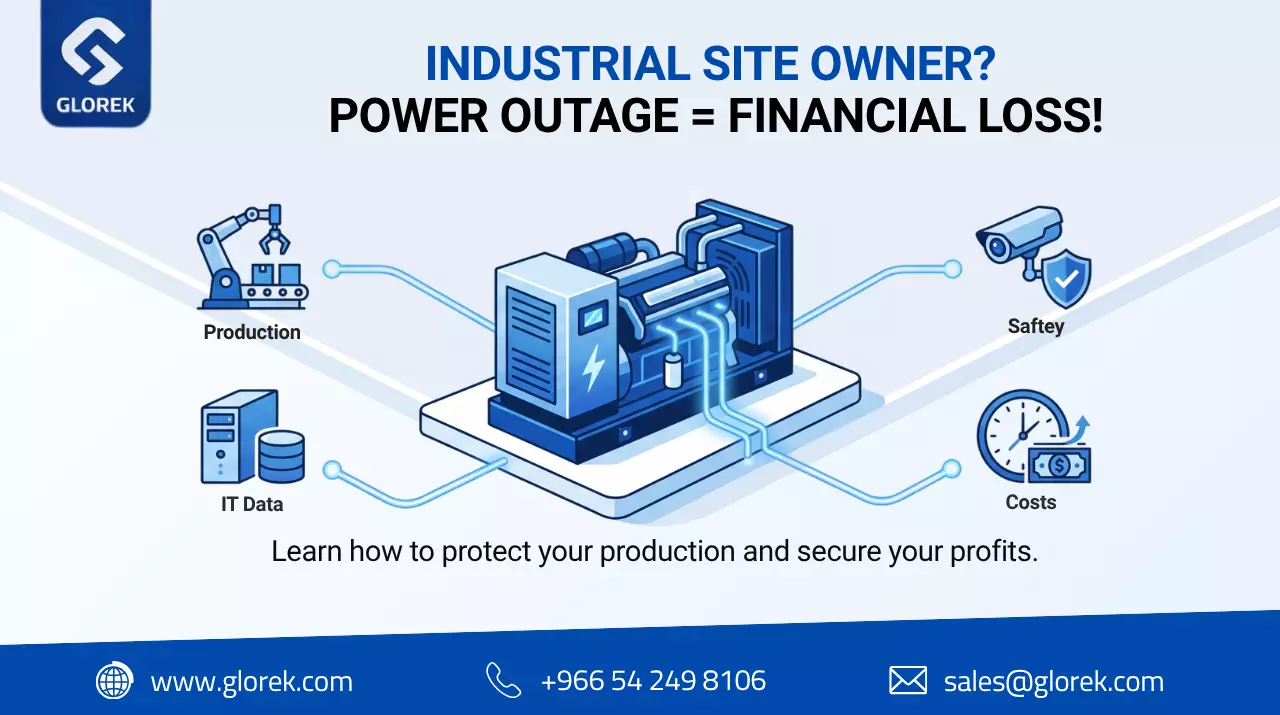
- Zero Downtime: Modern automated systems, CNC machines, and assembly lines often require hours to recalibrate and restart after an abrupt stop. A generator eliminates this gap, allowing operations to continue without missing a beat.
- Waste Prevention: In industries like food processing, chemicals, or plastics, a sudden power loss can ruin a whole batch of raw materials. Constant power ensures that your inventory and materials are never wasted due to temperature changes or mid-process stops.
- Financial Security: A single hour of shutdown can cost a factory millions in lost output. Having a backup generator acts as a solid insurance policy against these unpredictable losses.
3. Protection of Sensitive Machinery
Industrial equipment is a high-capital investment. Sudden power failures and the subsequent surges are physically damaging to the hardware.
- Voltage Fluctuations: When power trips or returns suddenly, the resulting surges can fry sensitive electronic components, PLCs, and circuit boards. A generator with a high-quality ATS (Automatic Transfer Switch) provides a clean transition.
- Controlled Shutdowns: Having immediate backup power gives your technical team the time needed to shut down delicate machinery according to proper protocols. This prevents mechanical jams and significantly extends the equipment’s lifespan.
4. Site Safety and Security
A dark factory floor is a high-risk environment. Safety is the top priority for any plant manager, and power is central to that mission.
- Emergency Lighting and Ventilation: The risk of accidents and injuries increases drastically in the dark. Generators keep emergency lighting and ventilation systems active, ensuring workers can navigate the floor safely and breathe clean air.
- Constant Security: CCTV cameras, fire alarms, and electronic locks require 24/7 power. A generator ensures your facility remains secure from external threats and internal hazards even when the local grid goes down.
5. Digital Backbone and IT Infrastructure
Modern factories are now digital hubs. Everything from ERP software to internal communication relies on servers and stable connections.
- Data Integrity: Backup power ensures that your digital data does not get corrupted during a crash.
- Communication: It keeps your Wi-Fi and internal communication systems online, which is vital for coordination during an emergency or power outage. If the servers go down, the entire management chain loses visibility of the floor.
6. The Glorek Advantage: Renting vs. Owning
Buying a large-scale industrial generator is a massive commitment that ties up significant capital. For many businesses, partnering with a specialist like Glorek for a rental solution is the smarter, more agile move.
- Cost Effectiveness: Industrial generators are expensive assets. Renting allows you to convert a massive upfront cost into a manageable monthly operating expense, keeping your capital free for other growth needs.
- Maintenance Free: When you rent, the responsibility for servicing, oil changes, and technical repairs falls on an expert team. You get the power without the maintenance headache or the need to hire specialized mechanics.
- Scalability and Flexibility: Industrial needs change. If you add a new wing to your factory or move to a bigger site, you can easily swap your Glorek generator for a different KVA size. This level of flexibility is impossible with a unit you have already purchased.
Conclusion
In the industrial world, you don’t wait for a crisis to happen before you prepare for it. Proactive planning is what separates market leaders from those who struggle to keep up. You can either wait for the next power outage to calculate your losses, or you can take control of your facility’s energy future today.